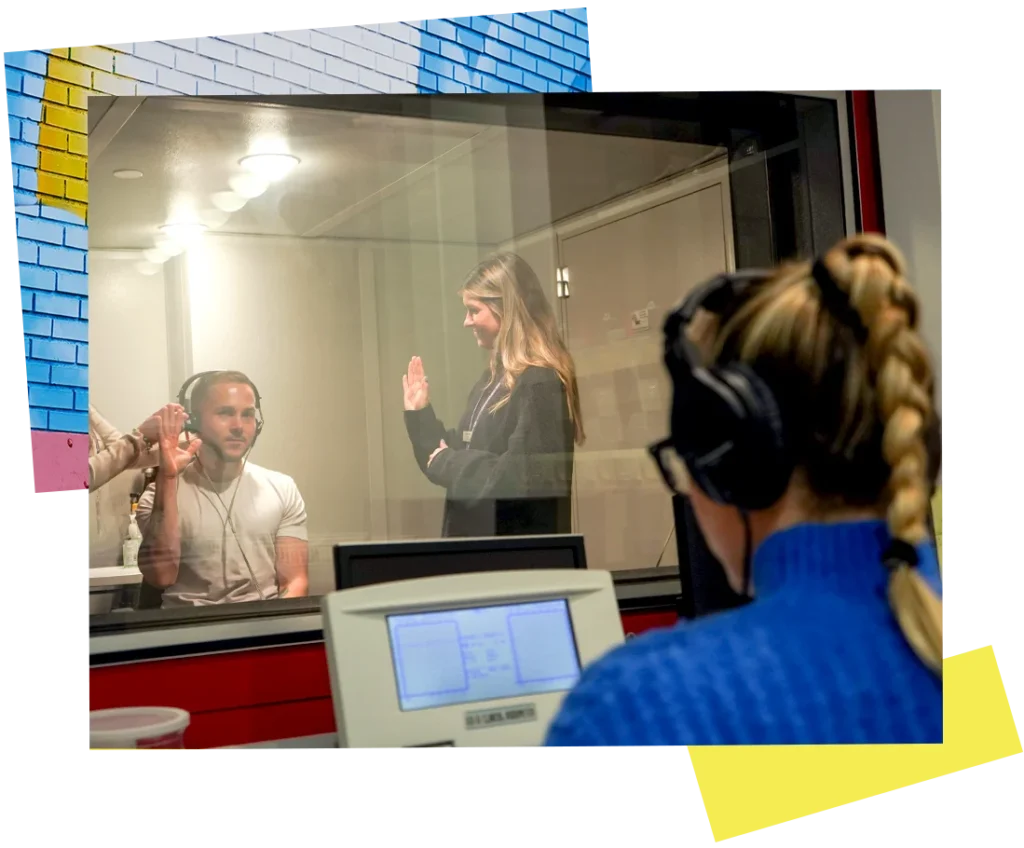
Taught by award-winning faculty
Online and on-campus students learn from the same NYU faculty members – dedicated scholars, researchers, and clinicians – who connect current research and practice to the classroom and clinical learning environment.
Our faculty members are all active in the field and are dedicated to supporting and mentoring students in their collective and individual pursuits.
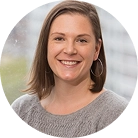
Sonja Molfenter
Professor Molfenter’s research focuses on swallowing function and dysphagia, including the physiological changes that affect swallowing across health conditions and the lifespan.
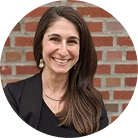
Stacey Rimikis
Professor Rimikis specializes in acquired neurogenic communication disorders, including aphasia and neurocognitive disorders, with research focused on language processing and clinical intervention.
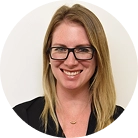
Kelly Bridges
Professor Bridges’ clinical and research interests include adult neurogenic communication disorders, dysphagia, and pragmatic communication in adults with psychiatric and neurodegenerative disorders.
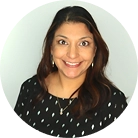
Alisha Brown Gandhi
Professor Gandhi specializes in culturally and linguistically responsive assessment and intervention for children and adolescents with communication disorders.
A comprehensive master’s curriculum for aspiring SLPs
The MS in CSD curriculum prepares you to become a well-rounded speech-language pathologist and treat clients with a variety of communication disorders.
Students develop knowledge and skills in areas including:
- Speech, language, voice, fluency, motor speech, and swallowing disorders
- Assessment, diagnosis, and intervention approaches
- Evidence-based clinical decision-making
- Culturally responsive approaches to clinical care
- Clinical practice across pediatric and adult populations in varied settings
You have the ability to pursue your graduate degree full time or part time based on your scheduling needs. You can earn your master’s in speech-language pathology in as few as six or seven 14-week terms by attending full time – or set a slower pace by attending part time until the Clinical Practicum and Field Placement Sequence begins, at which point full-time availability is required.
Expand your perspective
Go beyond the core curriculum with unique opportunities designed to deepen your cultural awareness and global understanding of communication sciences.
Bilingual Extension Track
Students interested in multilingual practice may pursue the Bilingual Extension Track (BET), which provides a pathway for eligible students to earn academic content and fulfill clinical requirements mandated by New York State for the Bilingual Extension certificate to the TSSLD.
Study abroad opportunities
Students in both the on-campus and online modalities of the MS in CSD have the opportunity to complete a study abroad program to learn about communication disorders through a cross-cultural lens. In recent programs, students had the opportunity to study in Lund, Sweden, or Accra, Ghana. Future program offerings will be highlighted on our website.
Clinical preparation for a career in speech pathology
Clinical experiences build progressively throughout the program, helping you develop the assessment, diagnostic, and treatment skills needed to serve diverse populations across the breadth of speech-language pathology practice. In the CSD program, you are assigned a dedicated placement specialist who will work with you to find NYU Steinhardt-approved clinical field placement sites in or near your community.
The roadmap below represents an example pathway for a full-time student. Coursework may be completed on a full- or part-time basis, but Field Placement Practicums III, IV, and V require full-time commitments. The earliest that a student would begin the Clinical Practicum and Field Placement Sequence is in their second term, depending on their plan of study.
Clinical Practicum Sequence
| Course | Clinical experience |
|---|---|
| Clinical Practicum I: Pre-Clinic | A three- to four-day immersion at NYU’s campus |
| Clinical Practicum II: Diagnostic Assessment | A three- to four-day immersion at NYU’s campus |
| Clinical Practicum III: Treatment | A local placement two days per week for 15 weeks; 16+ hours per week |
| Field Placement Practicum IV: Pediatrics | A local placement three to five days per week for 12–16 weeks; 35+ hours per week |
| Field Placement Practicum V: Adults | A local placement three to five days per week for 12–16 weeks; 35+ hours per week |
Clinical Practicum I: Pre-Clinic
Clinical Practicum II: Diagnostic Assessment
Clinical Practicum III: Treatment
Field Placement Practicum IV: Pediatrics
Field Placement Practicum V: Adults
A three- to four-day immersion at NYU’s campus
A three- to four-day immersion at NYU’s campus
A local placement two days per week for 15 weeks; 16+ hours per week
A local placement three to five days per week for 12–16 weeks; 35+ hours per week
A local placement three to five days per week for 12–16 weeks; 35+ hours per week
With the online program, you will receive the in-depth preparation to provide forward-thinking, culturally and linguistically responsive care to clients of all ages without having to relocate.
Accreditation and licensure preparation
Certification and Licensure
The curriculum aligns with American Speech-Language-Hearing Association (ASHA) standards for academic and clinical preparation in speech-language pathology and prepares graduates to meet the requirements for initial certification. Students complete 375 direct clinical hours, including 150 hours with pediatric populations, as part of their preparation.
Each state has its own standards for speech-language pathology licensure. Students should review the requirements of their state to understand eligibility for initial licensure in the state where they plan to practice.
Explore our CSD student outcome data, including the Praxis pass rate.
Accreditation
The master of science (MS) education program in communicative sciences and disorders (residential and distance education) at New York University is accredited by the Council on Academic Accreditation in Audiology and Speech-Language Pathology of the American Speech-Language-Hearing Association, 2200 Research Boulevard, #310, Rockville, MD, 20850, 800-498-2071 or 301-296-5700.
New York University is regionally accredited by the Middle States Commission on Higher Education (MSCHE), one of six regional accrediting associations in the country.
Take the next step toward a career in speech-language pathology
Discover how our online MS in CSD can help you build the academic foundation, clinical skills, and professional perspective needed to succeed as a speech-language pathologist.